Jaipur can feel like a lot before you’ve even landed. Hilltop forts, palaces in the middle of the old city, lakes, bazaars, temples, and enough good food to fill a whole trip by itself. So the real question is: how do you fit the best of it into the time you actually have?
That’s what this Jaipur itinerary guide is for. Maybe you’ve got one day between trains, a lazy weekend, or three full days to do it properly. There’s a plan below for each, and every one links to a detailed day-by-day guide with timings, routes and tips.
A little background helps. Maharaja Sawai Jai Singh II founded Jaipur in 1727, and it was one of India’s first planned cities, laid out on a neat grid. The pink paint came later, in 1876, to welcome a royal guest. All that planning works in your favour: the major sights sit in a few clusters, so a sensible route can save you hours in traffic.
How to Choose the Right Jaipur Itinerary
Before you pick, ask yourself three things. How much time do you have? How fast do you like to travel? And what do you actually care about seeing?
Short on time? The one-day plan hits the big names without rushing the best ones. If you like a slower pace, with room for long lunches and a bit of shopping, two days is the sweet spot. And if you want the hill forts, the museums, the markets and a few quieter corners, three days lets you do all of it without feeling like you’re ticking boxes.
October to March is the best time for any of these plans. The days are pleasant and sightseeing is easy. Between April and June, Jaipur afternoons can be brutal, so start early and keep indoor stops for the middle of the day.
1-Day Jaipur Itinerary
One day isn’t much, but it’s enough to get a feel for the city if you plan well. The trick is to start early, keep nearby sights together, and save the old city for the afternoon, when the light turns golden.
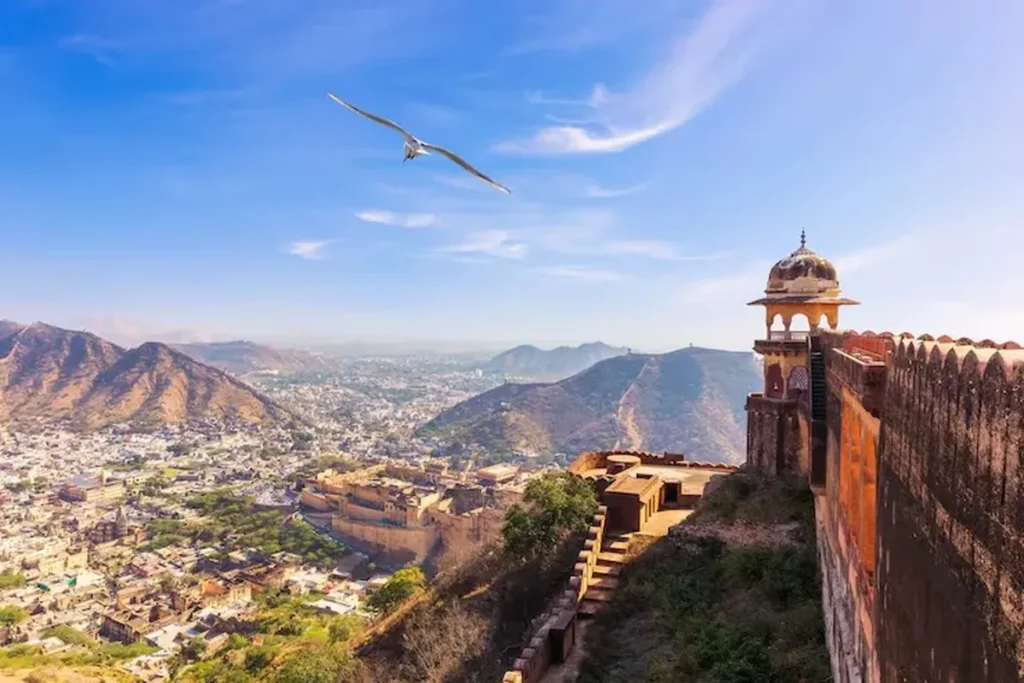
Most people begin at Amber Fort, ideally before the tour buses show up. The courtyards, mirror-work halls and ramparts are worth a slow wander. On the way back, pull over for a photo of Jal Mahal floating on Man Sagar Lake. After lunch, head into the old city: the giant astronomical instruments at Jantar Mantar, the courtyards and museum of City Palace, and the honeycomb façade of Hawa Mahal. Finish with a walk through the bazaars, or catch the sunset from the hills.
It’s a full day, but it works, and it leaves you with a strong first impression.
Read the full plan: 1-Day Jaipur Itinerary: The Perfect One-Day Travel Plan
2-Day Jaipur Itinerary
This is where Jaipur starts to feel good. You’re no longer sprinting between monuments, and you have time for the things that make the city more than a set of postcards.
Spend the first day in the old city, the royal heart of Jaipur. Take in City Palace, Jantar Mantar, Hawa Mahal and the bazaars around them, and stop for a proper Rajasthani lunch. Finish at Albert Hall Museum, which looks lovely lit up after dark. On day two, head for the hills. Amber Fort takes the morning, then it’s on to Jaigarh Fort, just up the ridge, which has some of the best views and military history around. End the day at Nahargarh Fort, watching the city light up below you.
Our detailed article goes deeper on this one, including tweaks for families with kids, older travellers and anyone who’s mostly here for photography.
Read the full plan: 2-Day Jaipur Itinerary: A Complete 2-Day Travel Plan
3-Day Jaipur Itinerary
Three days lets you see Jaipur the way a local would show it to a visiting relative. Day one is the royal old city. Day two is the forts and the lake. Day three is for everything that makes Jaipur more than a list of monuments: temples, gardens, craft workshops, cafés, museums and shopping.
On that last day, you could visit Galta Ji, the old temple complex tucked into the Aravalli hills, then dive into the block-printing and blue pottery that Jaipur is famous for. Spend the afternoon in a museum or a quieter neighbourhood, and still have time for a long, unhurried dinner. It’s also a good length if you’d like to add a half-day trip to a nearby village or a cooking class.
Read the full plan: 3-Day Jaipur Itinerary: A Complete 3-Day Travel Plan
Top Attractions Covered in These Itineraries
A handful of places show up in every plan. Here’s what each one is about, with links to our dedicated pages.
Amber Fort: The big hilltop fort-palace, built in 1592 by Raja Man Singh I. Known for Sheesh Mahal, Ganesh Pol and sweeping views over Maota Lake.
Hawa Mahal: The “Palace of Winds”, built in 1799, with a five-storey pink sandstone façade and 953 small windows. Morning light is the best time to photograph it.
City Palace: The royal residence in the middle of the old city, where the former royal family still lives. Look out for the courtyards, the galleries and the beautiful Pritam Niwas Chowk.
Jantar Mantar: An 18th-century astronomical observatory and UNESCO World Heritage Site, home to the world’s largest stone sundial.
Nahargarh Fort: A hilltop fort looking down on the city, and the most popular spot in Jaipur for sunset.
Jaigarh Fort: The “Fort of Victory”, famous for its enormous cannon, thick ramparts and views over Amber.
Jal Mahal: The palace that seems to float in the middle of Man Sagar Lake. A quick stop, but a great photo.
Albert Hall Museum: Jaipur’s oldest museum, built in the Indo-Saracenic style and filled with art, textiles and artefacts.
Where to Stay in Jaipur
Where you sleep changes how the trip feels, so it’s worth a little thought. There’s no single “best” area in Jaipur, just different neighbourhoods for different kinds of travellers.
Old City (Pink City): Stay here if you want to be close to Hawa Mahal, City Palace and the bazaars. You get atmosphere and walkability, along with narrow lanes and traffic. Heritage havelis and small boutique hotels are common.
C-Scheme and MI Road: The comfortable, central option. Plenty of mid-range and upscale hotels, restaurants, cafés and shops, and easy access to most major sights.
Bani Park and Civil Lines: Quieter residential areas that suit people who like guesthouses, home-cooked meals and calmer evenings.
Amer Road: Heritage resorts and palace hotels line this stretch, close to Amer Fort and with more of a resort feel. The trade-off is a longer ride to the city sights.
For a one-day trip, you probably don’t need a hotel at all. For two or three days, a base in or near C-Scheme or the Old City usually keeps travel time down.
Jaipur Travel Tips
A few habits make any Jaipur itinerary go more smoothly.
Start early. The forts and palaces are calmer before 10 am, and the light is better for photos. Crowds and heat both build as the day goes on.
Group sights by location. Amber, Jaigarh and Nahargarh are in the north. Hawa Mahal, City Palace and Jantar Mantar are a short walk from each other in the old city. Jal Mahal sits on the road in between. Moving in clusters saves a lot of time.
Check opening days and timings. Most monuments are open daily, but some museums close on certain days, and timings can shift during festivals. A quick check beforehand saves a wasted trip.
Use a cab, auto or ride-hailing app. All are easy to find. For a full day of sightseeing, many travellers hire a car for the day. If you take an auto-rickshaw, agree on the fare before you get in.
Dress for comfort and respect. Light cotton clothes and comfortable shoes are best, since you’ll be on stone floors and uphill ramps. Carry a scarf or shawl for temples.
Shop smart. Jaipur is known for block-printed textiles, blue pottery, jewellery and juttis. Fixed-price emporiums and government-run outlets are a safe place to start. In the bazaars, bargaining is expected.
Eat local. Try dal baati churma, pyaaz kachori, lassi, and laal maas if you eat meat. In monsoon season, don’t miss ghewar. Food is as much a part of the itinerary as the monuments.
Carry water and sun protection. A hat, sunscreen and a water bottle matter more than you’d think, especially at the forts.
Start Planning Your Jaipur Trip
Jaipur rewards both the hurried and the unhurried traveller, but a little planning goes a long way. Pick the itinerary that fits your time, open the detailed guide, and use our attraction pages when you want more on any single stop.
Choose your plan: 1-Day Itinerary | 2-Day Itinerary | 3-Day Itinerary
Got a favourite spot, or a tip we missed? Drop it in the comments and help the next traveller plan their Pink City trip.
Frequently Asked Questions
How many days are enough for Jaipur?
Two days works for most people. You can cover the forts and the old city at a comfortable pace. One day gets you the highlights, and three days lets you go deeper.
What is the best time to visit Jaipur?
October to March, when the weather is at its most pleasant. Winter mornings can be chilly, so pack a light jacket.
Can I see Jaipur in one day?
Yes. With an early start and a good route, you can fit in Amber Fort, Jal Mahal, Jantar Mantar, City Palace and Hawa Mahal in a single day.
Is Jaipur good for a weekend trip?
Definitely. A two-day Jaipur itinerary fits a weekend neatly, and it’s one of North India’s most popular short getaways.