Kishan Bagh Jaipur: History, Timings, and What to Expect
Kishan Bagh Jaipur sits quietly at the base of Nahargarh hill, far from the noise of Hawa Mahal and City Palace. Most tourists never even hear its name, and that’s exactly what makes it special. Sand dunes roll across this park like a small piece of Jaisalmer got dropped into Jaipur by mistake. Nobody planted flowers here or built fancy fountains. Instead, a naturalist named Pradip Krishen brought back the desert that once covered this land. Years of hard work turned a barren, forgotten patch into a real habitat for birds, foxes, and native plants. Locals now walk here in the early morning, and photographers show up just before sunset to catch the golden light on the sand. Behind the dunes lies an old love story too, one involving a prince and the ruins of a palace called Mariam Mahal. Visiting this place feels less like sightseeing and more like stepping into a quiet corner of Rajasthan’s past. Here’s everything worth knowing before you go.
What Is Kishan Bagh Jaipur?
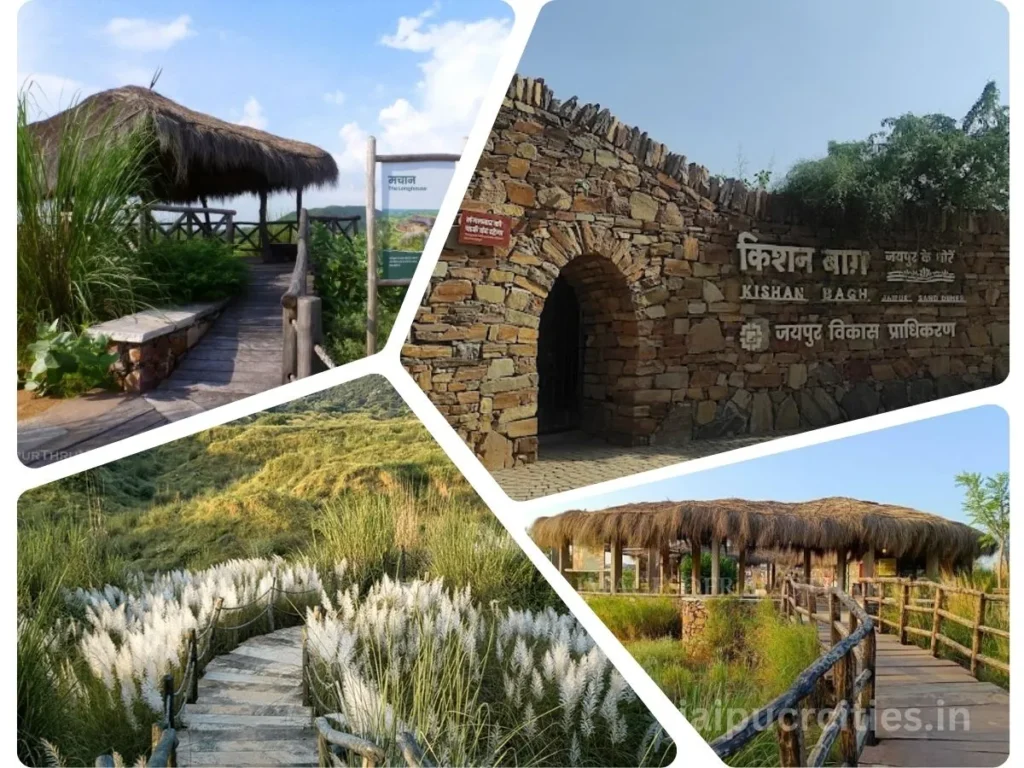
The word “Bagh” usually makes people picture a Mughal-style garden, full of neat flower beds and straight pathways, like the ones seen at Amer or City Palace. Kishan Bagh breaks that pattern completely. Nothing here was planted for show. Instead, this is a proper sand dune park, built to bring back the kind of desert landscape found deep in western Rajasthan, closer to Jaisalmer than to a royal courtyard. Sandy trails wind between low dunes, thorny shrubs, and native desert trees, giving the whole place a raw, wild feel rather than a manicured one. Nature lovers often describe it as one of the few spots in Jaipur where the land feels untouched, even though it was carefully restored.
Location plays a big part in why this desert park feels so out of place, in the best way. Sitting in Vidhyadhar Nagar, right at the foothills of Nahargarh, Kishan Bagh stays tucked away from Jaipur’s usual tourist crowd. Hills rise up behind it, and the surrounding area still holds onto a quiet, semi-wild character. Getting here means moving away from the Pink City’s forts and bazaars into a calmer, greener part of town.
Anyone expecting flowerbeds and fountains should adjust their expectations before visiting Kishan Bagh park.
The History and Origin of Kishan Bagh
Long before any restoration work began, this land carried an old story tied to Amer’s royal family. Local history speaks of Jagat Singh, son of Raja Man Singh of Amer, who married a woman named Mariam. Palace ruins from that era still stand within the park, known today as Mariam Mahal, and the surrounding land eventually took on the name Kishan Bagh. Much of this remains local legend passed down through generations rather than a documented royal record, but it gives the place a quiet romantic weight that few Jaipur parks carry.
Centuries later, in 2016, the land looked nothing like a garden at all. Barren, dry, and mostly forgotten, this stretch near Nahargarh caught the attention of the Jaipur Development Authority. They brought in Pradip Krishen, a well-known name in Indian desert ecology, to guide its transformation. Rather than planting a conventional garden, Krishen focused on restoring the natural desert habitat that once existed there, using native shrubs, grasses, and sand formations true to western Rajasthan.
Years of steady work followed. Eventually, in December 2021, Kishan Bagh opened to the public, with the Rajasthan Chief Minister at the time attending the inauguration. Since then, it has slowly built a name among locals as a peaceful, lesser-known corner of the city.
Understanding this backstory makes a walk through Kishan Bagh feel far more meaningful than just another park visit.
Where Is Kishan Bagh Located and How to Reach It
Vidhyadhar Nagar holds this park, tucked right against the base of Nahargarh Fort’s hills. Google Maps lists the address as Sector 8, Vidhyadhar Nagar, Jaipur, so typing “Kishan Bagh” directly into any map app will get you there without confusion. Getting confused with the busy Pink City area, home to Hawa Mahal and City Palace, is easy since both fall under greater Jaipur, but Kishan Bagh sits in a quieter northern pocket, a short drive away from the old city’s chaos. Distance-wise, expect a manageable drive from most central Jaipur hotels, and airport travelers should plan for a longer ride since Jaipur International Airport sits on the opposite side of the city, closer to the south.
Cabs remain the easiest option for most visitors, especially tourists unfamiliar with local roads. Autos work fine too, and drivers around Vidyadhar Nagar generally know the park by name. Renting a scooter or driving yourself gives more flexibility, particularly if you plan to combine this trip with Nahargarh Fort or nearby hiking trails, since parking near Kishan Bagh is fairly simple compared to spots deeper in the old city.
Booking a cab through a hotel or app usually saves the most time and avoids any wrong turns near Vidhyadhar Nagar’s residential lanes.
Kishan Bagh Timings and Entry Fee
Weather shapes almost everything about a visit here, including the hours the park stays open. During winter months, roughly October through February, Kishan Bagh usually opens around 8:30 in the morning and stays open until about 5:30 in the evening, giving visitors comfortable daylight hours without the harsh sun. Summer flips this schedule. Gates tend to open much earlier, closer to 6:30 AM, letting people enjoy cooler air before the heat sets in, then reopen again in the evening. Checking current timings before heading out is always a smart move, since park hours can shift slightly depending on the season or local notices.
Ticket prices stay refreshingly simple. Adults typically pay around ₹50 for entry, while students with a valid ID often get a discounted rate closer to ₹25. Nothing fancy or confusing here, just a straightforward gate fee that goes toward maintaining the park.
One detail trips up a lot of first-time visitors: Kishan Bagh usually stays closed on Tuesdays. Showing up on the wrong day means a wasted trip, so this is worth double-checking, especially if you’re combining the visit with Nahargarh Fort or other nearby spots.
Planning your visit around the season and skipping Tuesdays saves both time and disappointment.
What to See and Do Inside Kishan Bagh
Golden sand stretches out the moment you step inside, and honestly, it feels nothing like the rest of Jaipur. These Kishan Bagh sand dunes form the heart of the whole experience, shaped naturally over the years to recreate what locals call the “Roi” landscape, a type of shrubland found in the drier parts of western Rajasthan. Walking through this terrain feels closer to Jaisalmer than to anything you’d expect inside city limits.
Beyond the dunes, desert flora fills every corner of the park. Thorny shrubs, wild grasses, and hardy native trees grow exactly the way they would in untouched desert regions. Wildlife enthusiasts often come specifically to spot chinkara deer moving quietly through the bushes, along with desert foxes that stay mostly hidden during the day. Bird lovers usually get lucky too, since peacocks, mynas, and other native species frequent the area, especially during cooler hours.
Boardwalks made of wood run across sections of the park, letting visitors walk over the sand without disturbing the fragile dune structure underneath. Several elevated viewpoints along these trails give a wide view of the surrounding hills and desert stretch, perfect for anyone who enjoys a short trek without committing to a full hike.
Bringing a camera here rewards you more than almost any other spot in Jaipur.
Best Time to Visit Kishan Bagh
Jaipur summers hit hard, and a desert park only makes the heat feel stronger. Choosing the right season matters here more than at most other city attractions. October through March gives you the most comfortable weather, with mild temperatures that make walking across the dunes actually enjoyable instead of exhausting. Winter mornings especially bring a light chill that pairs perfectly with the open desert scenery, while summer visits between April and June can feel brutal by midday, even with the sand’s natural texture and shade from native shrubs.
Time of day matters just as much as season when figuring out the best time to visit Kishan Bagh. Sunrise brings soft, cool light and a quiet park, ideal for those who prefer fewer crowds and calmer wildlife activity. Sunset, though, tends to steal the spotlight, and it’s easy to see why. Light spreads gold across the dunes during this window, turning the whole landscape into something that photographers travel across the city for. Several visitors specifically mention this spot as a favorite sunset point Jaipur locals recommend, especially for capturing the hills and sand together in one frame.
Timing your visit around cooler months and golden hour gives you the best version of Kishan Bagh, hands down.
Why Kishan Bagh Matters for Desert Ecology and Conservation
Conservation work rarely gets the spotlight it deserves, but Kishan Bagh deserves a mention beyond just being a pretty park. Pradip Krishen, the same naturalist behind this project, also worked on Rao Jodha Desert Rock Park in Jodhpur, another well-known desert ecology comparison point for anyone curious about India’s restoration efforts. Both parks share a similar philosophy: instead of forcing artificial greenery onto dry land, they focus on bringing back what naturally belongs there. Jodhpur’s version leans more toward rocky terrain, while Jaipur’s park highlights sand dunes and shrubland, giving each project its own distinct character despite sharing the same guiding hand.
Native species play a huge role in why this kind of ecological restoration in Jaipur actually works long-term. Planting local shrubs, grasses, and trees means the ecosystem can sustain itself without constant artificial watering or maintenance, unlike a typical manicured garden. These native plants also support local wildlife, giving birds, insects, and small animals a habitat that feels natural rather than forced. Desert ecology across Rajasthan depends heavily on this kind of balance, where every plant and creature plays a small part in keeping the land stable.
Understanding this deeper purpose makes Kishan Bagh feel less like a tourist stop and more like a living example of how desert land can heal itself with the right care.
Photography and Visitor Tips for Kishan Bagh
Photographers in Jaipur talk about this park for good reason. Golden hour transforms the dunes into something almost cinematic, with warm light hitting the sand at angles that make every shot look intentional, even for beginners. Elevated viewpoints near the boardwalks give some of the best angles, capturing both the dunes and the distant hills in one frame. Couples planning a pre-wedding shoot location in Jaipur often choose this spot specifically because it looks nothing like the usual palace or fort backdrop everyone’s already seen a hundred times. A Kishan Bagh photoshoot genuinely stands out on social media simply because so few people expect a desert landscape inside city limits.
Comfort matters just as much as timing, though. Sand can get surprisingly hot underfoot, especially past mid-morning, so closed shoes or sturdy sandals work far better than flip-flops. Carrying water is non-negotiable, since shade is limited across most of the park and desert air dries you out faster than expected. Sunscreen, sunglasses, and a hat help too, particularly if you’re staying for an extended shoot or a slow walk through the dunes.
Following a few basic Kishan Bagh Jaipur tips, like dressing right and carrying water, turns a good visit into a genuinely comfortable one.
Places to Visit Near Kishan Bagh
Nahargarh Fort sits close enough to Kishan Bagh that skipping it feels like a missed opportunity. Perched on a hill overlooking Jaipur, this fort offers sweeping views of the entire city, especially stunning during sunset. Many visitors combine both spots into a single half-day trip, starting with the desert park in the morning and ending at Nahargarh as the light softens in the evening. Distance between the two stays short enough that a quick cab or auto ride connects them without much hassle.
Hiking enthusiasts, though, often head straight for the trails around Hathni Kund and Myla Bagh instead. Tucked into the same Vidhyadhar Nagar hills, these lesser-known trails attract locals who prefer quieter, less commercial hikes compared to the more touristy fort routes. Hathni Kund winds through rocky terrain and offers a rugged, off-the-beaten-path feel, while Myla Bagh adds another scenic stretch worth exploring for anyone comfortable with uneven ground and a bit of a climb. Neither trail gets crowded, which makes them appealing for early morning walks or weekend treks away from the city noise.
Pairing Kishan Bagh with Nahargarh Fort works well for casual travelers, while hikers should carve out extra time for Hathni Kund and Myla Bagh too.
How Kishan Bagh Got Its Name — The Meaning Behind “Kishan Bagh“
Names carry history, and “Kishan Bagh” is no exception, even though its exact origin isn’t fully documented anywhere official. “Kishan” comes from Krishna, one of the most common name roots across Rajasthan, used widely for people, places, and temples alike. Pairing it with “Bagh,” the Hindi and Persian word for garden, simply gives you “Krishna’s Garden” or “Kishan’s Garden,” a fairly common naming pattern for green spaces across North India.
Local accounts don’t point to a specific temple or deity connection tied directly to this land, though. Instead, most references trace the name back to the scenic surroundings around Mariam Mahal, the ruined palace linked to Prince Jagat Singh of Amer, which locals eventually started calling Kishan Bagh over time. Exactly why that particular name stuck remains unclear, and no verified historical record spells out a single definitive reason.
Rather than a grand religious origin story, the name likely reflects something simpler: a common, familiar name attached to a piece of land over generations, the way many older Rajasthani localities get named. Sometimes, the real answer is quieter than the legend surrounding it.
Treat the name as part of Jaipur’s everyday naming tradition rather than a hidden religious clue, and the mystery becomes less confusing.
Accessibility and Facilities Inside Kishan Bagh
Basic comfort often gets ignored in tourism write-ups, but it matters a lot once you’re actually standing at the gate. Clean, functional washrooms are available inside the park, along with drinking water stations placed along the main walking route. Despite that, carrying your own water bottle is still a smart move, since desert heat dries you out faster than expected, and depending on foot traffic that day, water points can occasionally run low.
Seating comes in the form of benches placed at shaded rest spots along the walkways, giving tired visitors a chance to pause without leaving the park’s natural feel behind. Wooden boardwalks keep most paths fairly even underfoot, which helps elderly visitors move around without too much struggle, though some sandier stretches away from the main trail can still feel uneven.
Parking space exists near the entrance and is generally described as adequate for private cars and cabs, though it isn’t unlimited, especially during weekends or peak sunset hours when visitor numbers rise. No restaurants operate inside the park itself, so grabbing food beforehand or planning a stop in nearby Vidhyadhar Nagar market makes sense for anyone staying longer than an hour.
Checking these small details in advance, especially parking timing and water availability, makes the whole visit noticeably smoother.
Frequently Asked Questions About Kishan Bagh Jaipur
-
Is Kishan Bagh worth visiting?
Absolutely, especially for anyone tired of the usual fort-and-palace circuit. Desert dunes inside city limits are rare, and this park delivers a completely different mood compared to the rest of Jaipur’s attractions. Nature lovers, photographers, and quiet-seekers tend to enjoy it the most.
-
Is Kishan Bagh open on Tuesdays?
No, Tuesdays are typically off days for this park. Showing up on that day usually means finding locked gates, so planning your visit around any other day of the week avoids disappointment.
-
How much time do you need at Kishan Bagh?
Roughly one to two hours covers a relaxed visit, enough time to walk the boardwalks, explore the dunes, and catch a few good photo spots. Photographers or hikers wanting a deeper look might stretch that closer to two and a half hours, especially around sunset.
-
Is Kishan Bagh suitable for kids or elderly visitors?
Mostly, yes, though sandy terrain and some uneven paths mean strollers and wheelchairs might struggle in certain sections. Kids usually enjoy spotting birds and wildlife, while elderly visitors should stick to the flatter boardwalk areas rather than deeper dune trails.