10 Famous Forts in Jaipur You Should Explore
Jaipur’s forts are not just old buildings. They stand on hills and ridges like guards watching over the Pink City, carrying centuries of stories in their stone walls. Kings once ruled from behind these thick walls, planning battles and building empires. Rajasthan’s history feels most alive when you walk through a fort at Jaipur and touch its ancient gates.
Every wall here has a reason for being built the way it is. Soldiers once stood watch from these same towers, scanning the desert for enemies. Visitors today climb the same steps, though for a very different reason: to see breathtaking views and feel a little bit of that old royal life.
Traveling through Jaipur without visiting its forts means missing the heart of the city. These forts in Jaipur hold the real character of Rajasthan, mixing bold architecture with quiet courtyards and secret passages. Many are still standing strong after hundreds of years.
Getting to know Jaipur forts properly takes some planning, though. So let’s look at the ten most famous ones, what makes each special, and why they deserve a spot on your trip.
1. Amber Fort
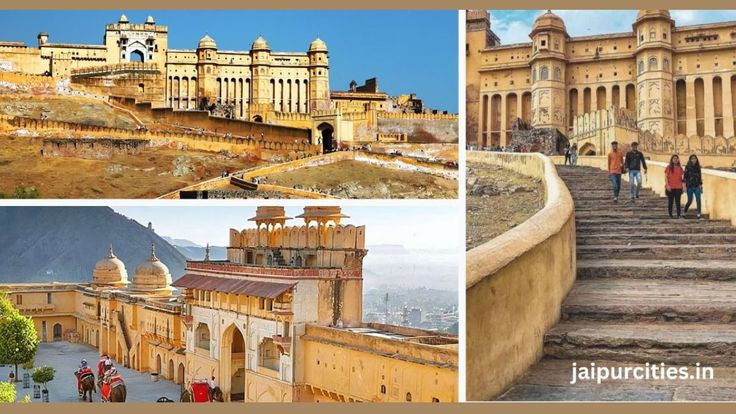
Perched on a rocky hill above Maota Lake, Amber Fort looks like something out of an old fairy tale. Raja Man Singh started building it back in the 16th century, and later rulers kept adding to it over the years. Golden sandstone walls glow warm in the afternoon sun, especially if you catch them right before sunset. Walking through the courtyards, you get a real sense of how grand royal life once was here.
Carvings cover nearly every surface inside, and some of them are so detailed you’ll want to stop and stare. Sheesh Mahal, the Mirror Palace, is the real showstopper. Thousands of tiny mirrored pieces line its walls and ceiling, and even a single candle flame used to light up the whole room like stars. Elephants often carry visitors up the steep path to the main gate, though walking up works just as well if you’re up for it.
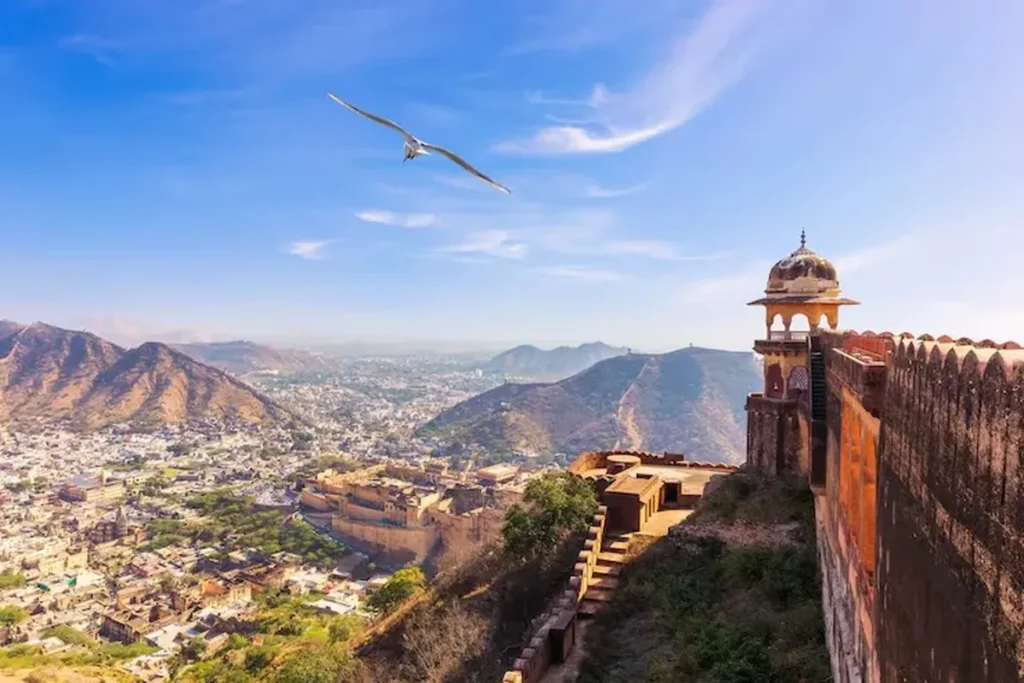
Views from the top stretch across the Aravalli hills, and you can spot Jaigarh Fort sitting close by on another ridge. Locals still consider Amber one of the most important forts in Jaipur, and honestly, it earns that reputation. History buffs, photographers, and architecture lovers—everyone finds something here.
Try visiting early morning, right when it opens. Crowds build up fast by midday, and the heat can get rough during summer months.
2. Nahargarh Fort
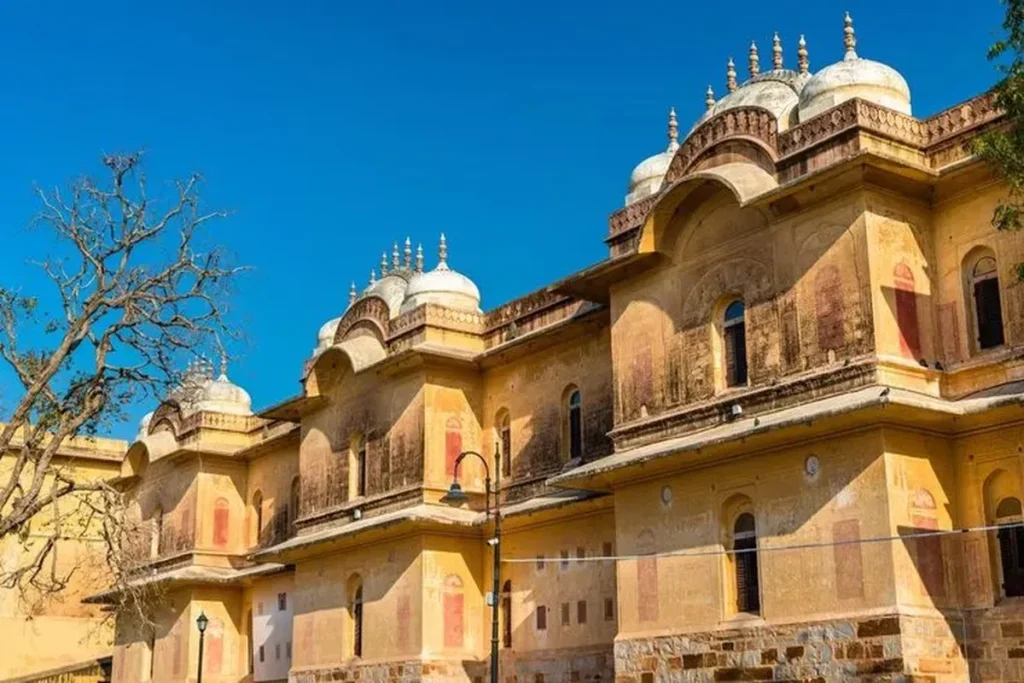
Sitting high on the Aravalli hills, Nahargarh Fort gives you one of the best views of Jaipur you’ll ever get. Maharaja Sawai Jai Singh II built it back in 1734, mainly as a safe retreat for the royal family during tough times. Guards once used it to watch over the whole city from above, which explains why the views are so incredible today.
Halls inside show off a mix of Rajput and Mughal design, and some rooms still have detailed wall art worth slowing down for. Legend has it the fort’s name connects to a spirit that kept disrupting construction, and builders finally had to make peace with it before work could continue. True or not, it’s a fun story locals still share.
Couples and photographers love coming here in the evening. Sunset turns the whole sky orange and pink, and the city lights below start twinkling as darkness falls. Padao, a restaurant inside the fort, serves snacks and drinks with that same incredible view, so it’s worth grabbing a seat there if you have time.
Getting up the hill takes a short drive or a bit of a hike, depending on where you start. Roads can get busy near sunset since everyone has the same idea.
Pack a light jacket if you’re visiting in winter evenings—it gets surprisingly cool up there once the sun drops.
3. Jaigarh Fort
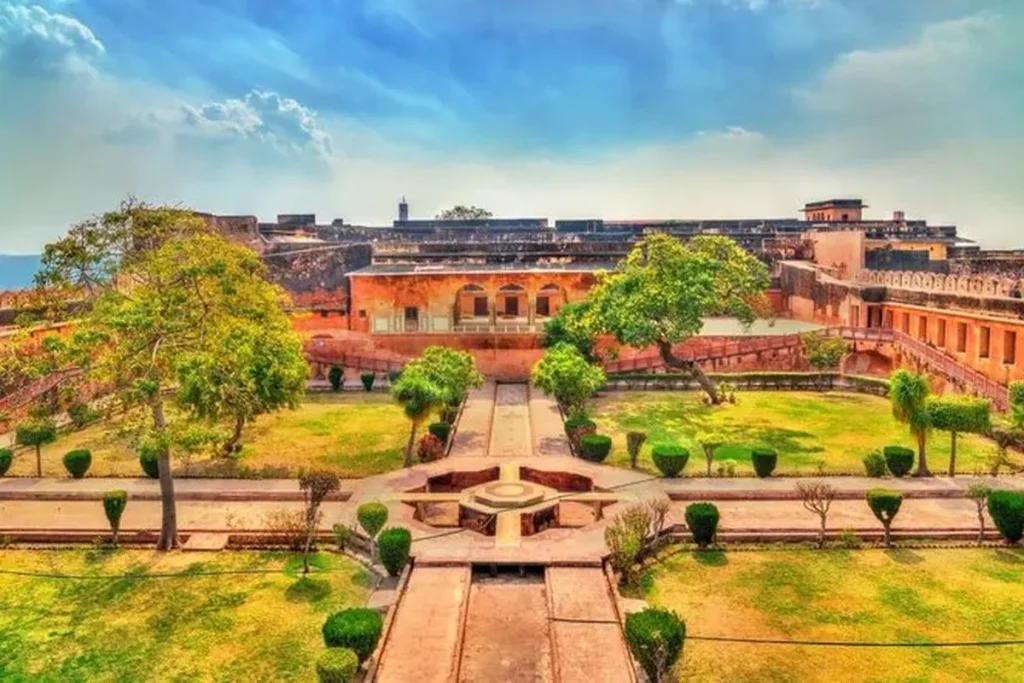
Right next to Amber Fort sits Jaigarh, a place built purely for war and defense. Maharaja Sawai Jai Singh II ordered its construction in 1726, and people often call it the Fort of Victory because it was never actually captured by enemies. Cannons, ammunition storage, and thick protective walls made it one of the strongest military bases in the region back then.
Inside, you’ll find the Jaivana Cannon, which still holds the title of the largest cannon on wheels ever made. Firing it apparently sent a cannonball flying over 20 miles, though thankfully it only got tested once. Engineers here also built a clever water harvesting system that collected rainwater and stored it for the fort, which was smart thinking for such a dry region.
Underground tunnels connect Jaigarh directly to Amber Fort below, and locals say royals used them to escape safely if the fort ever came under attack. Exploring these passages feels like stepping into an old adventure story. Guards’ quarters, watchtowers, and open courtyards are scattered throughout the complex, giving you plenty to walk through.
Distant views from the fort walls stretch across rocky hills and the valley below, making it a favorite for anyone who loves photography.
Wear comfortable shoes for this one—there’s a good amount of walking on uneven stone paths, and shade is limited during midday hours.
4. City Palace
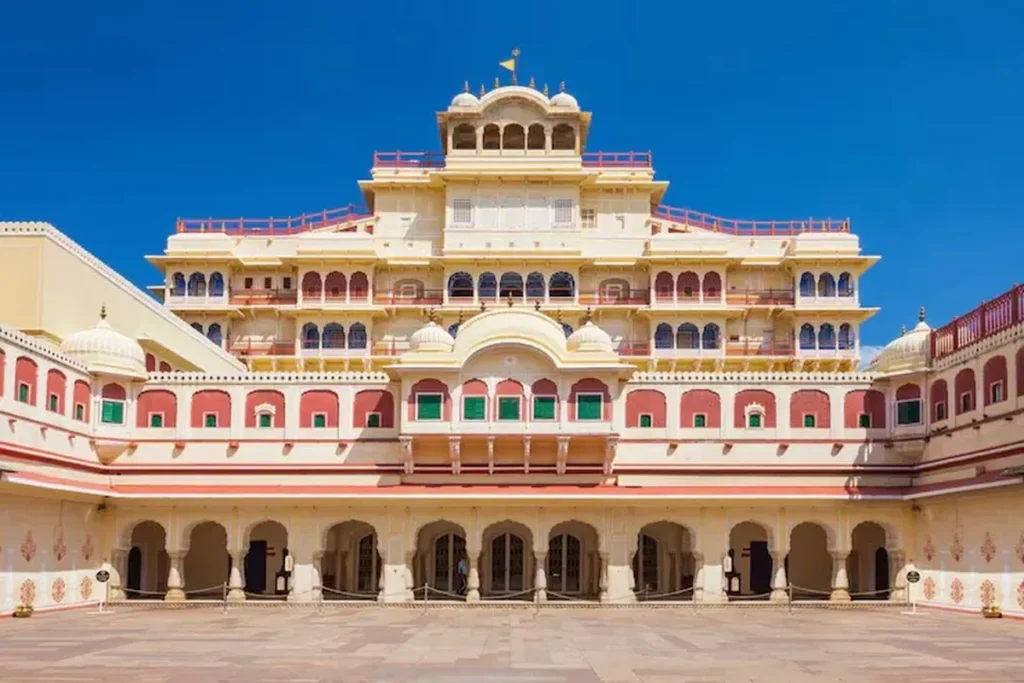
Right in the middle of Jaipur’s old walled city, City Palace still feels like the beating heart of royal Rajasthan. Maharaja Sawai Jai Singh II started building it in the early 1700s, around the same time he planned the rest of the Pink City. Rajput, Mughal, and even a bit of European style all blend together here, creating something you won’t quite see anywhere else.
Peacock Gate is one spot everyone stops to photograph, with its bright blue and green tiles covering every inch. Chandra Mahal rises up in the center, still home to the royal family, though only certain floors open to visitors. Mubarak Mahal sits nearby and now holds a textile museum full of old royal outfits, some stitched with gold thread that’s over a century old.
Weapons, manuscripts, and antique carriages fill other parts of the museum, giving a real sense of how the royals lived and fought. Courtyards throughout the complex are painted in soft pink and cream, matching the rest of the city outside its walls. Guides here often share fascinating stories about the current royal family, which adds a nice personal touch to the visit.
Late morning tends to have better lighting for photos, especially in the open courtyards.
Carry a scarf or shawl if you plan to enter certain areas, since some sections request modest covering for both shoulders and legs.
5. Hawa Mahal
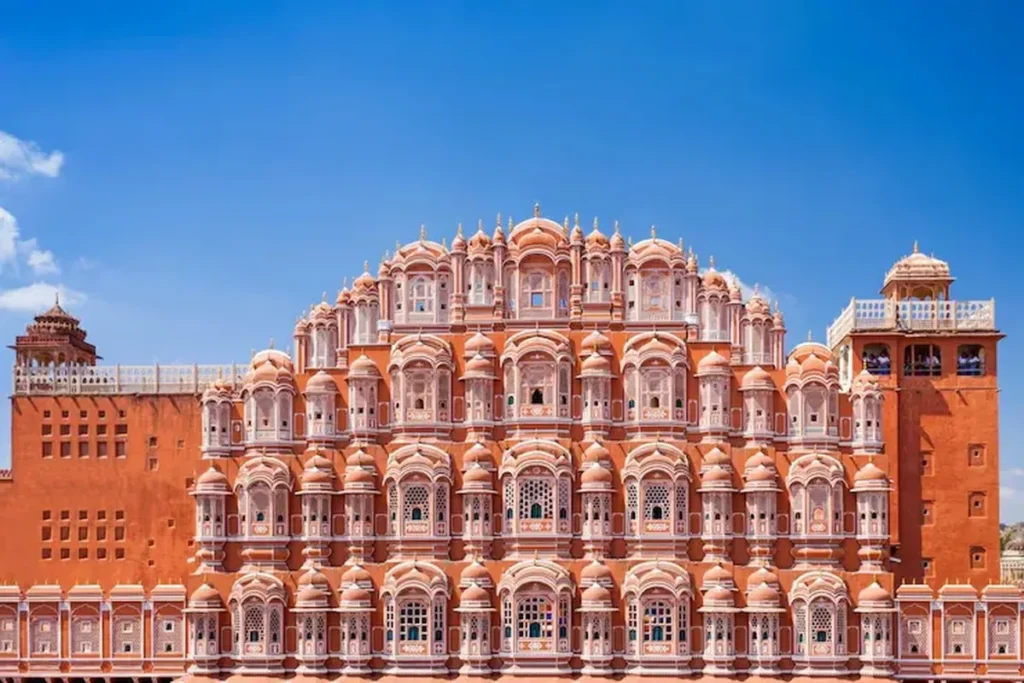
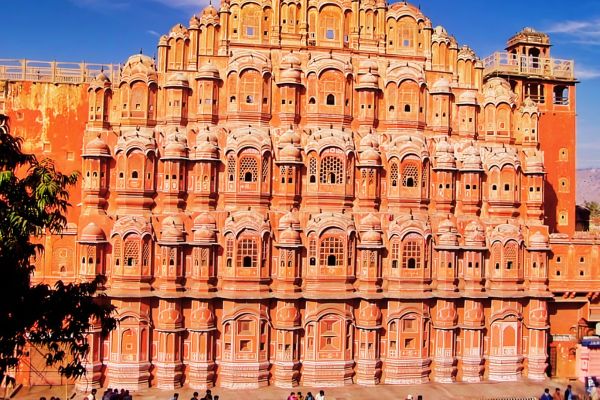
Technically, Hawa Mahal isn’t a fort at all, but no list about Jaipur’s heritage feels complete without it. Maharaja Sawai Pratap Singh had it built in 1799, and its pink-and-red sandstone front is probably the most photographed wall in the whole city. Five stories rise up like a honeycomb, and once you get close, you’ll notice hundreds of small carved windows covering nearly the entire face.
Almost a thousand tiny latticed windows make up this design, and they weren’t just for looks. Royal women used to sit behind them and watch street parades and daily life below, all without being seen themselves. That mix of privacy and beauty is really what makes this place special.
Climbing through the palace, you won’t find grand furnished rooms like other palaces have. Ramps replace stairs in most areas, which royal women once used to move around more easily in their long, flowing outfits. Breezes flow constantly through the windows, which explains why it’s nicknamed the Palace of Winds—it stays surprisingly cool even on hot days.
Standing at the top floor, you get a nice view over Jaipur’s busy streets and rooftops. Distant hills and even Amber Fort appear in the distance on clear days.
Morning visits work best here, since that’s when sunlight hits the front façade and makes the pink stone glow beautifully for photos.
6. Jantar Mantar
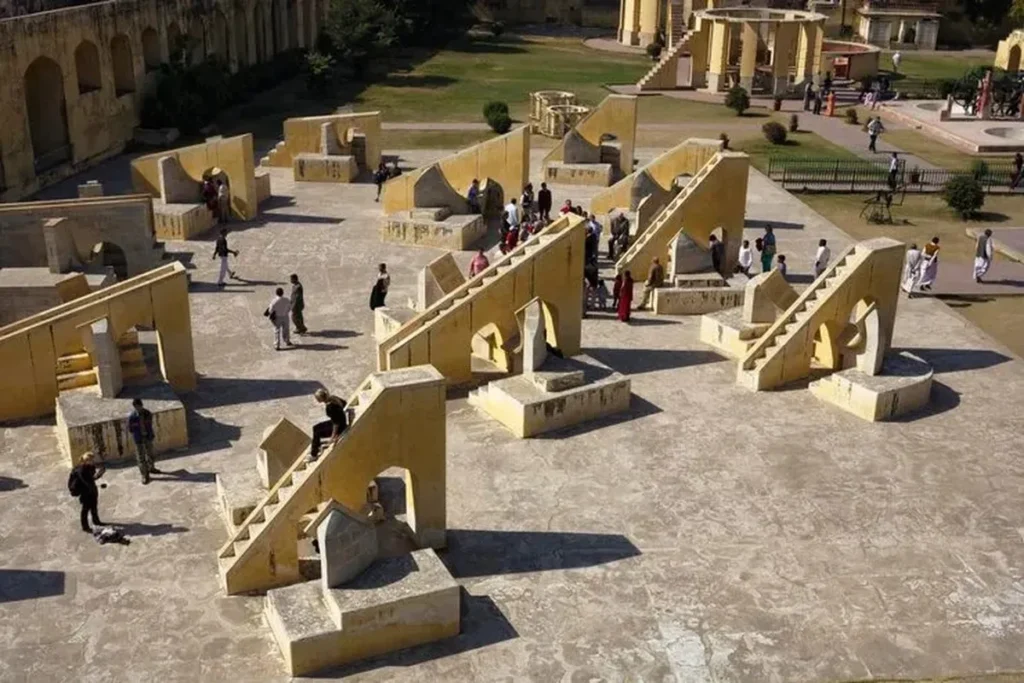
Science lovers will probably enjoy this stop more than any other on the list. Maharaja Sawai Jai Singh II, the same ruler behind several other Jaipur landmarks, built this observatory in the early 1700s. Nineteen huge stone instruments fill the grounds, each designed to track the sun, stars, and time with surprising accuracy for that era.
Giant sundials stand out immediately, and one of them, the Samrat Yantra, is actually the largest stone sundial in the entire world. Shadows move slowly across its surface, and it can tell time accurate to just a couple of seconds. Other instruments here track zodiac signs and planetary positions and even predict eclipses, which is honestly impressive for something built centuries before computers existed.
Walking through the site feels strange at first because nothing looks like typical fort architecture. Curved walls, tall pillars, and odd geometric shapes fill the space instead of domes or gates. Guides here really help make sense of it all, explaining how each structure works and why the king cared so much about astronomy.
UNESCO recognized this site as a World Heritage location, which says a lot about how rare and valuable it really is.
Bring sunglasses and water if you’re visiting midday, since there’s very little shade across the open stone courtyard.
7. Jal Mahal
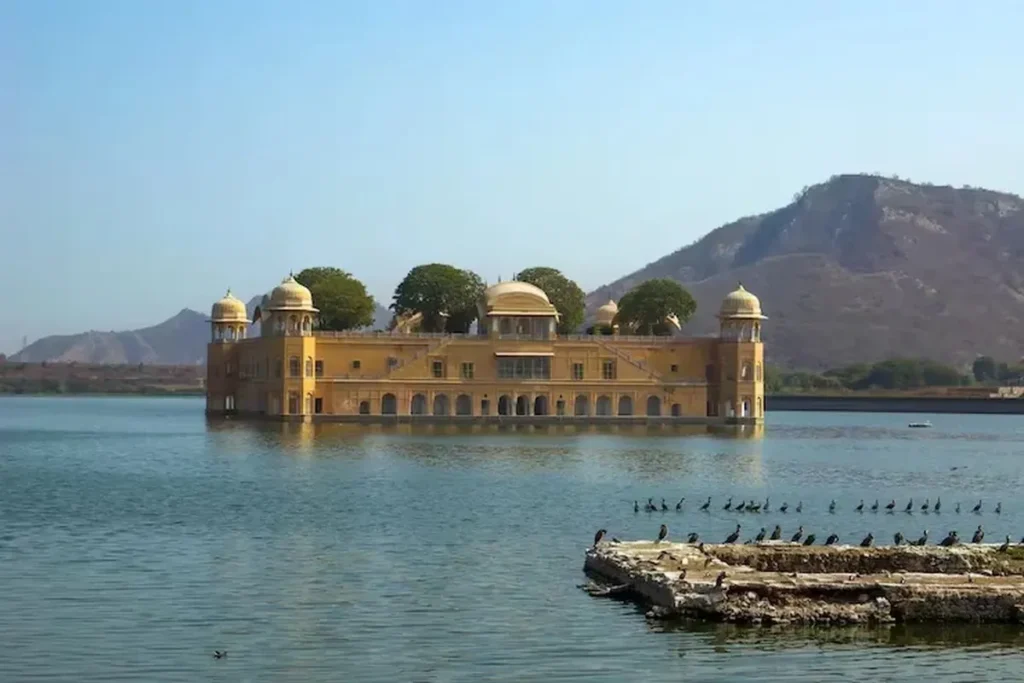
Floating right in the middle of Man Sagar Lake, Jal Mahal looks like something straight out of a painting. Maharaja Madho Singh I had it renovated in the 18th century, turning what was once a simple structure into the elegant palace you see today. Water surrounds the building on all sides, and only the top floor stays visible above the surface during high water levels.
Four floors actually sit underwater, though nobody can visit them since they’re permanently submerged. Sandstone walls glow a warm reddish-brown color, especially when the sun starts setting behind the Aravalli hills in the background. Reflections on the still lake water double the beauty, making it one of the most photographed spots in the whole city.
Boats used to carry royals out to the palace for private gatherings and quiet evenings away from the busy city. These days, tourists can’t actually enter the building itself, since it stays closed for preservation reasons. Still, plenty of people gather along the lakeside just to admire it from a distance.
Migratory birds show up here during winter months, adding even more life to the already scenic lake. Small cafes and viewpoints line the road nearby, giving you a comfortable spot to sit and take photos.
Evening visits work best, right around sunset, when the light turns golden and the palace practically glows against the water.
8. Albert Hall Museum
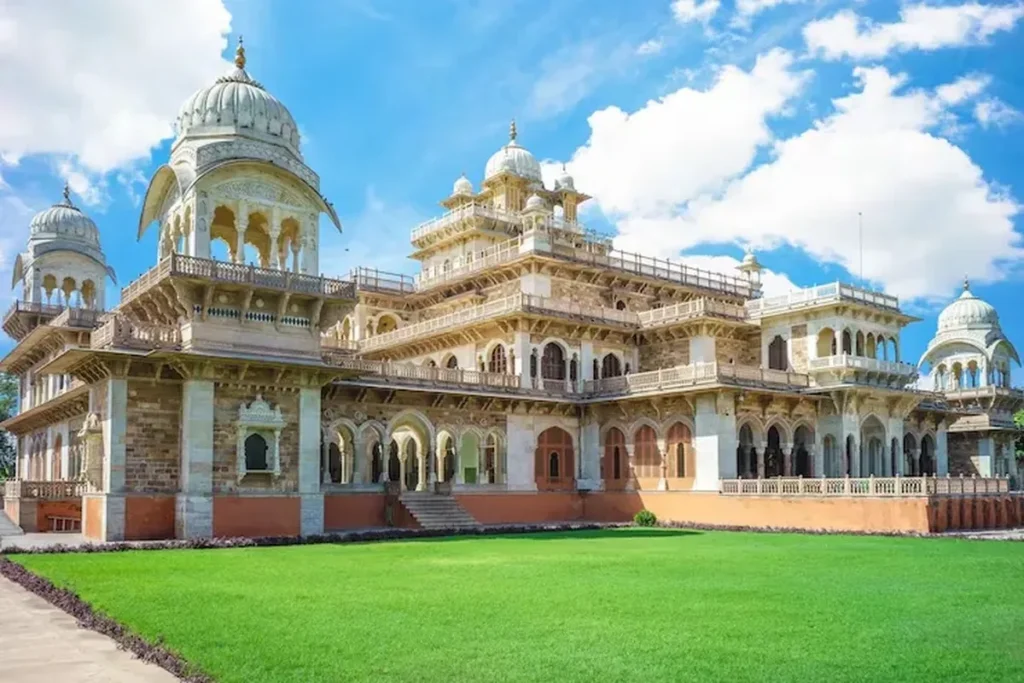
Sitting inside Ram Niwas Garden, Albert Hall is actually Jaipur’s oldest museum, and the building itself is half the reason to visit. Maharaja Sawai Ram Singh II started construction back in the 1870s, and it later got finished under his successor’s rule. British architect Samuel Swinton Jacob designed the whole thing, blending Indo-Saracenic style with touches of European and Rajasthani design.
Domes, arches, and detailed stonework cover the outside, making the building look almost like a smaller version of a grand palace. Inside, you’ll find a huge collection of old paintings, pottery, and sculptures gathered from different parts of India and even a few other countries. Egyptian artifacts, including a mummy, sit inside one of the galleries, which usually surprises first-time visitors.
Musical instruments, carpets, and metal crafts fill other sections, showing off different skills and traditions from across Rajasthan. Weapons and coins from centuries past give a deeper look into how rulers lived and fought back then. Nighttime brings a whole different vibe, since the entire building lights up beautifully after dark.
Gardens surrounding the museum offer a nice, quiet spot to relax after walking through all the exhibits inside.
Try visiting in the evening if you can, since the illuminated building against the night sky makes for some really memorable photos.
9. Sheesh Mahal
Tucked inside the Amber Fort complex, Sheesh Mahal deserves its own spotlight even though it’s technically part of a bigger structure. Raja Man Singh had it built during the fort’s original construction, and later rulers added even more detail to the walls over time. Thousands of small mirror pieces, along with colored glass, cover nearly every surface inside this palace section.
Candlelight used to be the only light source centuries ago, and yet even a single flame could make the whole room sparkle like a starry sky. Craftsmen shaped tiny convex mirrors and fitted them into detailed floral and geometric patterns across the ceiling and walls. Sunlight streaming through nearby windows during the day creates a similar sparkling effect, so daytime visits still feel magical.
Local guides love demonstrating the mirror effect by covering a window and lighting just one small light inside the room. Watching the reflections multiply across the entire space really shows off how clever the original craftsmen were. Rajput and Mughal artistic styles blend together here, much like the rest of Amber Fort surrounding it.
Getting a good look inside sometimes means waiting your turn, since the room stays fairly small and crowds build up quickly.
Visit early in the day if possible, since fewer crowds make it easier to actually stand still and appreciate the mirror work up close.
10. Moti Dungri Fort
Shaped like a small Scottish castle, Moti Dungri Fort really stands out from every other entry on this list. Built during the 18th century, it later got redesigned to resemble European castles, giving it a completely different look compared to typical Rajasthani forts. Perched on a small hill, it overlooks a busy stretch of Jaipur, adding to its almost fairy-tale appearance.
Private ownership means the fort itself stays closed to regular visitors, which honestly surprises a lot of tourists who show up hoping to explore inside. Royal family members reportedly still use it occasionally, keeping much of its interior a mystery to outsiders. Despite that, plenty of people still stop by just to admire the exterior and snap a few photos from the road.
Right at the base of the hill sits Laxmi Narayan Temple, often called Birla Mandir by locals, which draws far more visitors than the fort itself. Marble walls and detailed carvings make the temple worth a visit on its own, especially in the evening when it lights up beautifully. Many travelers combine both stops since they sit so close together.
Distant views of the fort look best from the temple grounds or nearby streets, since getting closer isn’t really an option here.
Pair your visit with an evening trip to the temple next door, since that’s when both spots look their most photogenic together.
Best Months to Visit Without Melting or Freezing
Timing your Jaipur trip makes a bigger difference than most people expect. Summers here turn brutal, with temperatures often crossing 40°C between April and June. Climbing hilltop forts like Amber or Nahargarh under that kind of heat drains your energy fast, and shade is hard to find once you’re out on open courtyards.
Monsoon season, from July to September, cools things down a bit but brings its own problems. Rain can turn stone steps slippery, and sudden showers sometimes cut visits short.
October through March stands out as the sweet spot for most travelers. Mornings feel crisp, afternoons stay pleasant, and evenings cool down enough for a light jacket. Walking through fort courtyards or climbing towers doesn’t leave you drenched in sweat during this stretch.
December and January bring the coolest days, sometimes dipping close to freezing at night, so pack layers if you’re visiting then. Early morning visits work well year-round, though, since forts open before crowds and harsh sun show up.
Checking the forecast a few days before your trip always helps avoid surprises.
Where to Eat Near Each Fort Without Wasting Time Searching
Sightseeing burns through energy fast, and nobody wants to waste an hour hunting for a decent meal between fort visits. Luckily, Jaipur makes this easy if you know where to look.
Near Amber and Jaigarh, small local dhabas line the road leading up to the hills. Simple thalis, hot parathas, and chai are easy to find here, and prices stay reasonable since these spots cater mostly to locals and drivers.
Around Hawa Mahal and City Palace, the old city gets crowded with food options. Rooftop cafes overlooking Hawa Mahal serve everything from Rajasthani thalis to basic Western dishes, and the view alone makes lingering over lunch worth it. Street stalls nearby sell kachori and pyaaz ki kachori, a local favorite worth trying at least once.
Jantar Mantar sits close enough to City Palace that the same food options work for both stops. Near Jal Mahal, small cafes along the lakeside offer snacks and drinks with a decent view, though options stay limited compared to the old city.
Carrying a bottle of water and some light snacks always helps, especially between forts where good food options might be a short drive away rather than right next door.
Making the Most of Your Fort Visit
Jaipur’s forts stack up as one of the richest collections of history you’ll find anywhere in India. Each one tells its own story, from Amber’s mirrored halls to Jaigarh’s massive cannon sitting quietly on a hilltop. Walking through them feels like flipping through chapters of Rajasthan’s past, chapter by chapter, wall by wall.
Trying to see every fort in one rushed trip usually backfires, though. Spread your visits across two or three days instead, and pick a mix of two or three forts in Jaipur per day so you’re not exhausted by noon.
Comfortable shoes matter more than people expect, since most of these places involve long walks and steep steps. Take your time, look closely at the details, and let the history sink in naturally.